This page answers what infrastructure should cost for a Company of One. Use it to size an annual software budget, separate client tools from practice tools, and see a lean stack that lands near $2,700 to $3,000 a year.
For a Company of One, a useful software zip code is about $2,000 to $3,000 a year, or roughly $167 to $250 a month. That band can cover Google Workspace, meeting notes, a craft AI, and a practice operating system. The lean stack I run lands near $240 to $250 a month with paid notes, closer to $225 if notes stay free. Starve the band and business development slips. Overbuy it and you pay for seats nobody sits in.
For today's LinkedIn post and this longer UNRIGGED piece: I had a weekly call with a client and he asked what infrastructure I recommended.
Perfect topic for those of us running a Company of One. Not a team. Not a fake org chart. One person who still has to land work, keep promises, and leave the week with a clear next move.
That afternoon I rode my electric beach cruiser around Nantucket. I always find at least one new trail. Today I was linking a favorite surfing spot to the golf course on trails and back roads. One of my rare gifts: 6th sense navigation. I found the link.
Ferris was right. Life moves pretty fast. If you do not stop and look around once in a while, you could miss it. The ride is where the answer lands.
The question that sent me exploring
His question: what infrastructure do you recommend?
Then he named his zip code: about $2,000 to $3,000 a year. Not $12,000 of team software. Not a stack built for a board of nobody.
That zip code sent me exploring so my mind could think.
$2,000 to $3,000 a year is about $167 to $250 a month. That is the right size of question for a Company of One. That band can buy Google, notes, a craft AI, and a practice operating system. Starve it and you keep the calendar apps while business development still runs six weeks behind. Overbuy it and you pay for seats nobody sits in.
Naming the zip code honestly is the first kindness. Pretending a $450 a month average software spend is required to look professional is how people buy noise.
Client tools versus practice tools
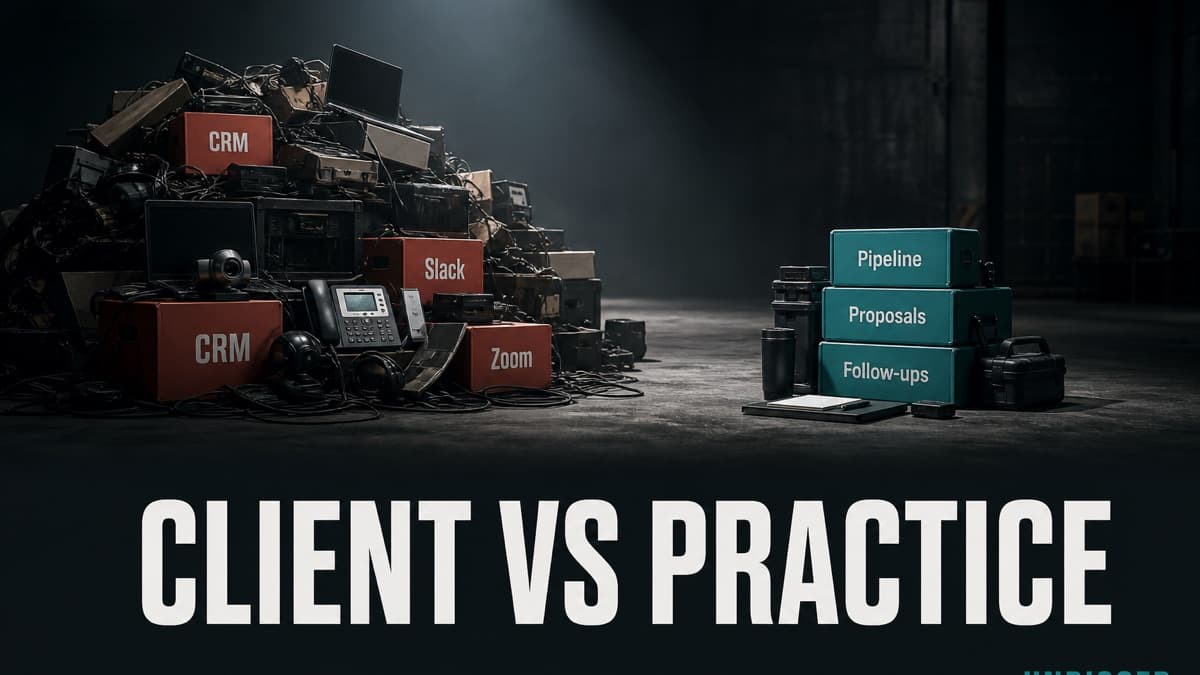
Most of the solopreneur software market sells the wrong lane: proposal, contract, project, invoice. Client delivery. Honestly, AI can do a lot of that now. That is not where a solo practice dies.
Client tools help you finish work someone already paid for. Practice tools help you get the next conversation, keep the promise you made, and notice who is going cold before the relationship goes quiet.
Client work has a deadline. Practice work does not. Skip the second job and Tuesday feels the same for about six weeks. Then it does not.
Where solo practices actually die
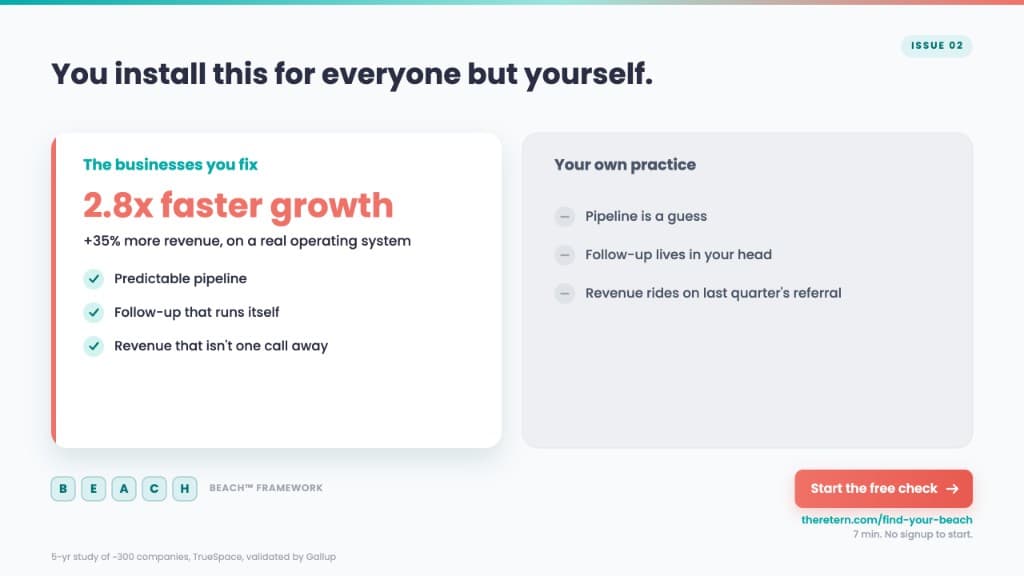
Solo practices do not die in proposals and invoices. They die when business development lives in the gaps between client work. The pipeline runs about six weeks behind. Nobody holds you accountable. So people buy more tools, then feel like technical idiots even when sitting next to Claude. Business development still falls behind.
George Leonard wrote in Mastery: "mastery is practice. Mastery is staying on the path." Buying another platform is not the path. If you choose not to decide, you still have made a choice.
That is why infrastructure cost is not a shopping question. It is a job question. Which job is the money funding this month: delivery you already sold, or the practice job that fills next month?
The over-built stack
I have seen $2,500 to $3,000 a month stacks, usually Professional HubSpot plus premium AI seats. A common bloated build still lands around $900 to $1,200, often used like Excel. Those tools were built for teams. A Company of One does not have time to become a HubSpot power user for a board of nobody.
I started The ReTern on HubSpot, then Pipedrive, then another. The CRM would not tell me who to call today, or who to add or remove. Nobody built a CRM for a Company of One. So I did. Proven at Chief Outsiders, then rebuilt for operators who run alone.
A directional check from the field: a 2026 survey of 152 fractional operators put tool chaos and calendar sprawl among the top five systemic threats, at an average software spend near $450 a month. Treat that number as directional. The number itself is not the problem. The problem is which pile the money is sitting in.
The lean stack that fits a $2,000 to $3,000 year
Here is the lean stack I would run if the annual zip code is about $2,000 to $3,000:
- Google Workspace: about $7 to $18 a month. Email and calendar stay here. Do not replace this with a second inbox product.
- Granola for meeting notes: about $14, or free. Capture the call without a third face on the screen.
- Claude Pro for craft: about $20, or about $17 if you pay annual. Proposals, follow-ups, thinking on the page. Not your CRM.
- The ReTern at $199. Your people. What needs you today. LinkedIn, email, and calendar in one practice rhythm. Coaching after the call.
- Domain: about a dollar a month. Website optional until a client needs it.
Core: about $240 to $250 with paid notes. Closer to $225 on Granola free. That is about $2,700 to $3,000 a year. It lands in the zip code he named. Honest monthly cost of owning the week.
Client-delivery tools can sit on top when a paid engagement needs them. That spend is project cost, not the base infrastructure of the practice.
The point of the ride was not more software. It was enough software to own the week, then stop shopping for the next CRM.
What each dollar is buying
Google buys communication you already live in.
Granola buys memory of the call so you do not rebuild the meeting from scraps.
Claude buys speed on craft once you know what you are saying.
The ReTern buys the practice job: what needs you today on people already in your book, and who is warm or going cold across your whole system.
If a tool does not fund one of those four jobs, it is decoration. Cancel it.
What The ReTern actually does
My CRM runs two jobs inside.
First: what needs you today on people already in your book. Reply owed. Promise due. Call today. Real obligations only. Under that list sits a prioritization method I built for Companies of One. It is tuned to what actually moves revenue. The formula stays with me. You get the right name at the top of the day.
Second: it looks across everyone in your system, not only names already on a board. Who is warm and should be added. Who is going cold. Who matters next, and why.
It does not replace Google, Granola, or Claude for proposals. Some people still add software for client-specific work. Once The ReTern is working, cancel the second CRM, enrichment, outbound automation, and calendar apps that promise to run your life.
Two peer stacks people compare themselves to
If you help companies run on EOS, the fees you must pay just to stay in that system often sit near $2,650 a month. That is before Google, AI, or the tools for your own practice. If you came up through Sales Xceleration, they help you get started as a sales advisor, then you still pay for Pipedrive and more. Bigger bills, and it is less clear what each dollar buys for your own Company of One.
Both of those paths are built to help you serve other companies. The ReTern is built to run your own one-person practice.
What to keep, what to cancel
Keep Google, Granola, and Claude for craft.
Cancel the second CRM. Cancel enrichment you never open. Cancel outbound automation that burns your name. Cancel the calendar app that promised to run your life and only added another login.
If a tool only makes you feel current, it is not infrastructure. It is a subscription you are afraid to end.
The close
Spend less. Own the week. Keep the tools that do client work when a client needs them. Stop collecting ones that only make you feel current.
A Company of One does not need a team stack. It needs an honest monthly cost, a clear practice job, and enough quiet to do the work.
If that is you: See if you fit.