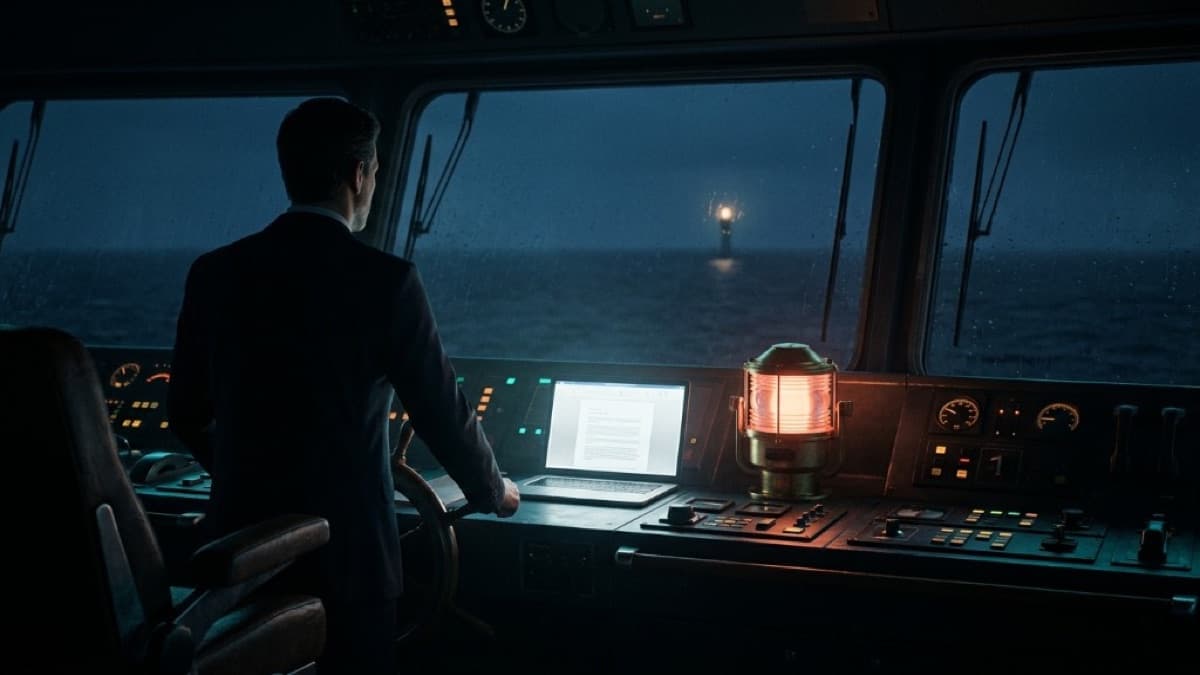
I keep seeing this on calls. Claude can write the email. It cannot run your practice.
I catch myself doing this more than I want to admit. Open Claude. Draft three polished notes before breakfast. Feel productive. Then Friday shows up and the close still has not moved. That is not laziness. That is treating a blank chat like a chief of staff.
If you have seen Office Space, you know the bit. Looking busy so nobody asks what you actually finished. That is me on a good AI morning. Busy. Loud. Not where the money is.
Kirk Coburn pioneered the fractional executive movement over fifteen years ago. He introduced the fractional chief marketing officer (CMO) model and founded Chief Outsiders, the firm that placed more than 2,000 fractional executives. He built The ReTern, the operating system for running an independent fractional practice. This piece is the honest version of what AI can and cannot hold for a company of one.

If you want the short search answer that also covers ChatGPT and Gemini in one place, start here: Can I run my fractional practice with ChatGPT, Claude, or Gemini?. This piece is the longer story.
Can AI run a fractional practice?
Honest concession, because pretending otherwise makes me look like a vendor.
Yes, for Layer 1 work. Claude can write the email. It can spit out a warm intro from a LinkedIn export if you paste the right names. It can draft a positioning statement that sounds sharp and still does not land. (I could build a side practice on that alone: take the Claude drafts people are shipping as their positioning, and rewrite them so a buyer finally understands what they do and can refer them.) Your own book of contacts is roughly DIY. Plenty of sharp independents already do that piece alone. I covered the broader split in AI for fractional executives.
No, for holding the practice. It forgets the promise you made three Tuesdays ago the second the tab closes. It does not know which quiet message still needs you and which one is just noise. It does not keep score on whether last month's move produced this month's win. And it cannot open doors inside a Crew of operators who already said yes to helping each other, when that network is live.
What coaching looks like without a platform
Here is the coaching I keep having to give myself.
Claude will rewrite whatever I paste. Happily. All day. What it will not do is look me in the eye and ask:
- Who still needs a decision from me?
- What did I promise, and by when?
- Which conversation, if I ignore it this week, costs me Freedom?
That is the incomplete help. The draft can be excellent and I can still be stalled, because I never made the call. Done is not a cleaner prompt. Done is one owed thread owned: replied, closed cleanly, or dated on the calendar. If the AI session ends without that, I did not finish. I typed.
You do not need my platform to start that. Open your inbox or LinkedIn. Pick one conversation that still needs a decision from you. Answer it, close it cleanly, or put a real date on the calendar. Do that before you open another AI draft. That is the coaching you can run alone this week.
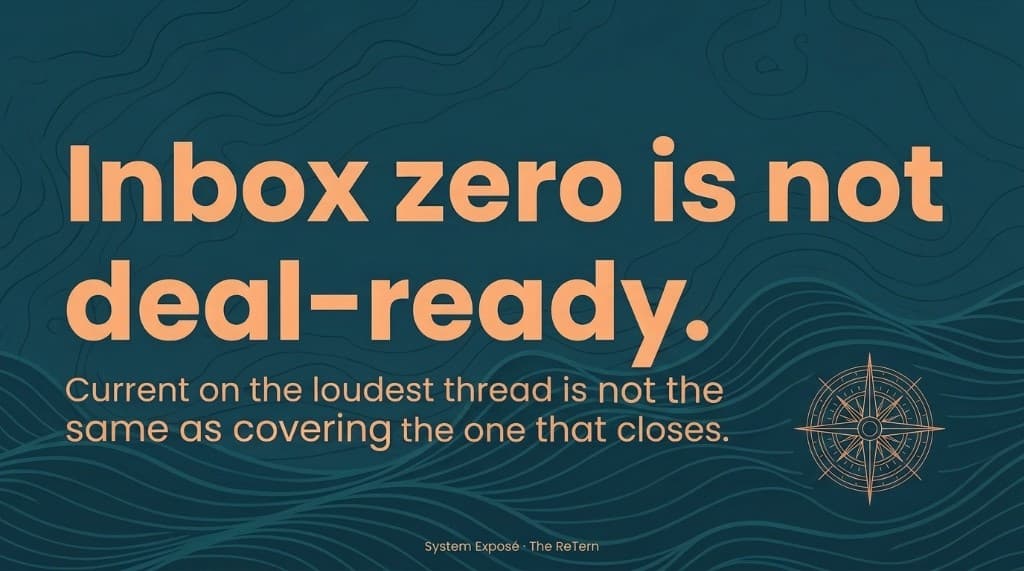
If "caught up" still feels like the win, read Inbox zero is not deal-ready. Same wound, different theater.
Wrong competitor: more prompts vs solitude
Southwest did not price against other airlines. They priced against the cost of driving. I remember when Southwest launched because my dad's behavior changed. He owned a business with offices in Houston, Dallas, and Austin, and he was always on the road. Then he started to fly. I think the free Wild Turkey they gave away as a promotion had something to do with it. At one point Southwest was the largest distributor of Wild Turkey. Herb Kelleher told me that story himself, while being the only person allowed to smoke inside the McCombs School of Business.
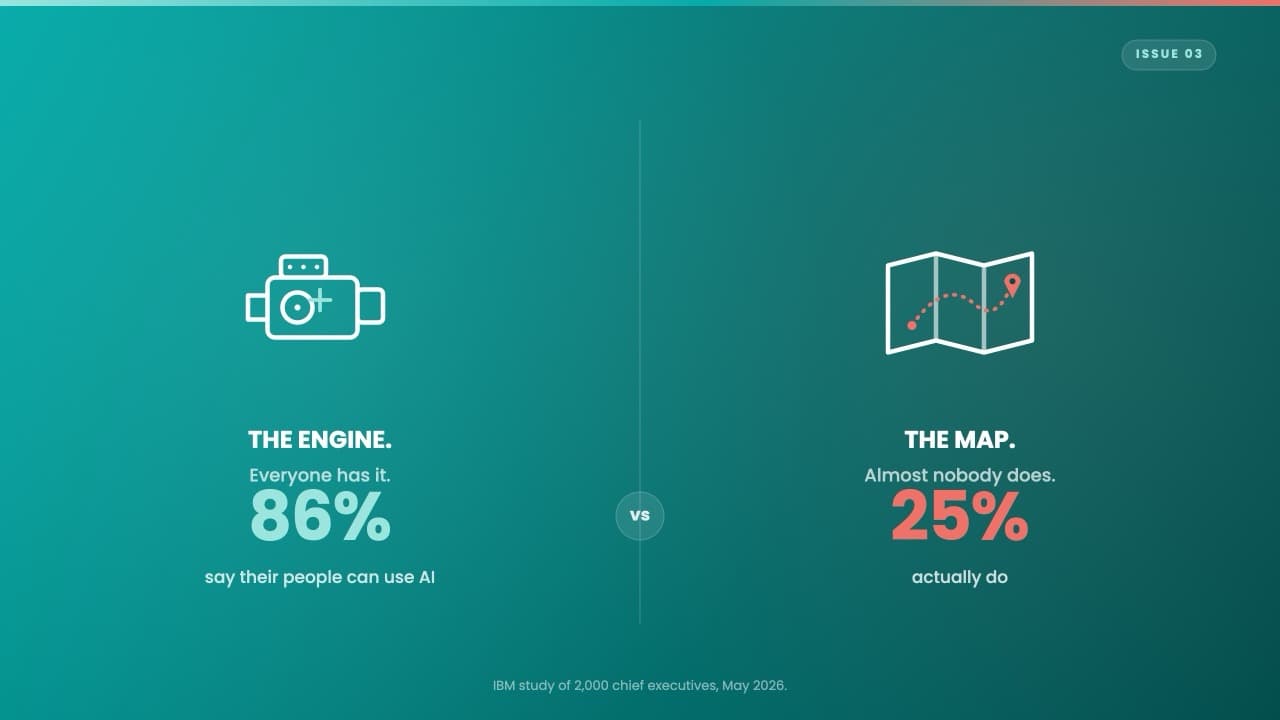
Wrong competitor, wrong fight. If you are competing with "more prompts," you are fighting Braniff. The real competitor is solitude: a company of one with no memory, no judgment about what you still owe, and no pipeline you actually control.
Groundhog Day is the other mirror. Same morning. Same "I am caught up." Same loop. Different year on the calendar. A smarter prompt does not break the day. Memory and judgment do. Ask me how I know.
The 23-minute cost (directional)
Gloria Mark's field studies at UC Irvine found it takes about 23 minutes, on average, to return to the original task after an interruption. Directional, not destiny. Not a fractional-executive dataset. Not a promise about your pipeline.
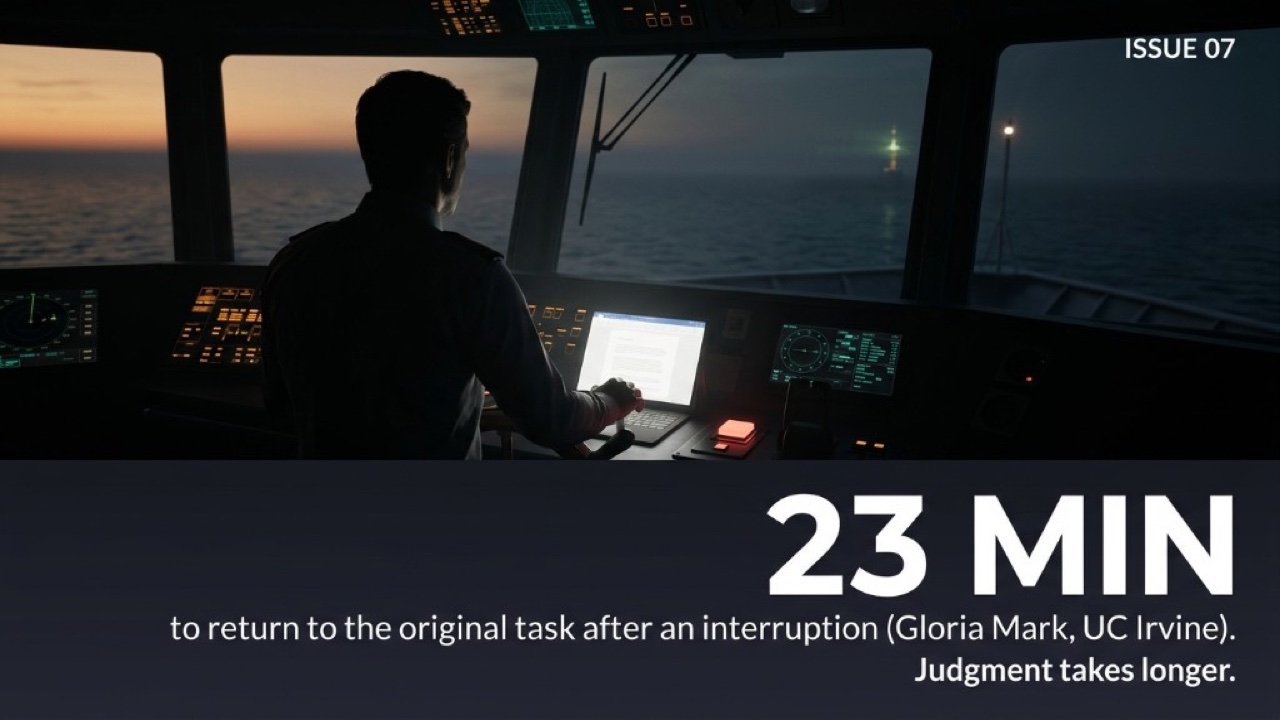
I do not need a faster draft. I need the context back before I pretend the polished reply was the work.
Freedom, for me, still looks like a pipeline I control. Income that stops being a rollercoaster. A practice that does not live only in my head, or only in the last chat window I closed. If that asymmetry sounds familiar, you already run an operating system for everyone but yourself.
What The Helm™ actually holds
I built The Helm™ for that reason. Honest version: it is an operating system for a practice of one. Years of running this work, plus the data from doing it for real, turned into a platform I use on myself first. Not another chatbot. Not another pretty draft window.
Unlike Fireflies and the other AI morning digests, it does not stop at a summary of what happened. It reviews my email, my calendar, and my LinkedIn contacts and messages (legally, by the way), and it prioritizes what I actually need to do today. That is the part a blank chat will never own for you.
Here is what it did for me recently. (Yes, me. The guy who writes about this for a living.)
It did not surface the newest shiny messages. It surfaced two older ones that still mattered, and it bailed me out on both.
One was a client email I had missed. Important. Not the top of the inbox. The Helm put it in front of me and made me decide: answer it, or close it cleanly. Sitting on it was not an option once I could see it.
The other was a prospect who was already at closing. Again, not the most recent ping. The one that could still become a yes or a quiet no. Same prompt from the system: you missed this. Do you answer, or do you own the decision not to?
For another client, it surfaced 105 leads that were already in their world and easy to miss when you are staring at the loudest thread. That is memory and judgment, not a cleverer prompt.
That is the difference. A chat window helps me write. Coaching is the part that forces the call. The Helm helped me see what I owed, and made me own it.
Do one thing this week
I keep seeing this on calls. Pick one conversation that still needs a decision from you. Finish it before you open another AI draft.
I built The Helm for me first. If you want a straight read on where your practice stands, including whether Authority (pipeline) is the weak dial, the free check takes a few minutes and shows you the weakest area first. No pitch deck. Just the mirror: Where does your practice stand? Take the free check.
If you want to try The Helm itself, Membership is full access from day one, with a 14-day money-back window on your first payment. Not a free trial. A real door, with an exit if it is not for you: theretern.com/pricing.
Sources (DIRECTIONAL)
- Gloria Mark / UC Irvine field studies: roughly 23 minutes, on average, to return to the original task after an interruption
This is workplace research on interruption cost. It is not a guaranteed outcome for your practice. It describes the environment while you feel productive on a polished draft.
Where does your practice stand?
See where you stand