A referral network for fractional executives is a small, deliberate group of people who meet your future clients before you do and who trust you enough to introduce you. The best of those people serve the same audience you serve with a different offer, which is what SADO means, and the most valuable of them sit in the bullseye, where a referral partner could also become a client. I believe most fractionals already know dozens of people like this, and I have seen very few of them organize those relationships on purpose. I founded Chief Outsiders and established the Fractional CMO category in 2007, and I founded The ReTern so fractional executives would not have to build that network alone.
Next: Get 30 minutes with me.
Why referrals matter so much in a practice of one
A CEO who hires a fractional executive is buying trust before buying a skill, and a warm introduction carries trust that a cold message never will. When a CPA, a coach, or another fractional tells a founder that you are worth a call, the founder walks into that call already leaning toward yes. I think a fractional practice lives or dies on referrals, so the network deserves the same planning you would give a client engagement.
What SADO means
SADO stands for same audience, different offer. The acronym has been around referral circles for a while, and I use it because it answers the first question every fractional should ask, which is who already spends the week with my buyers. A fractional CFO and a fractional CMO serve the same founders without selling the same thing, so each one can introduce the other without losing a dollar. The same logic holds for a business coach, a peer-group chair, or a CPA who advises owners every day.
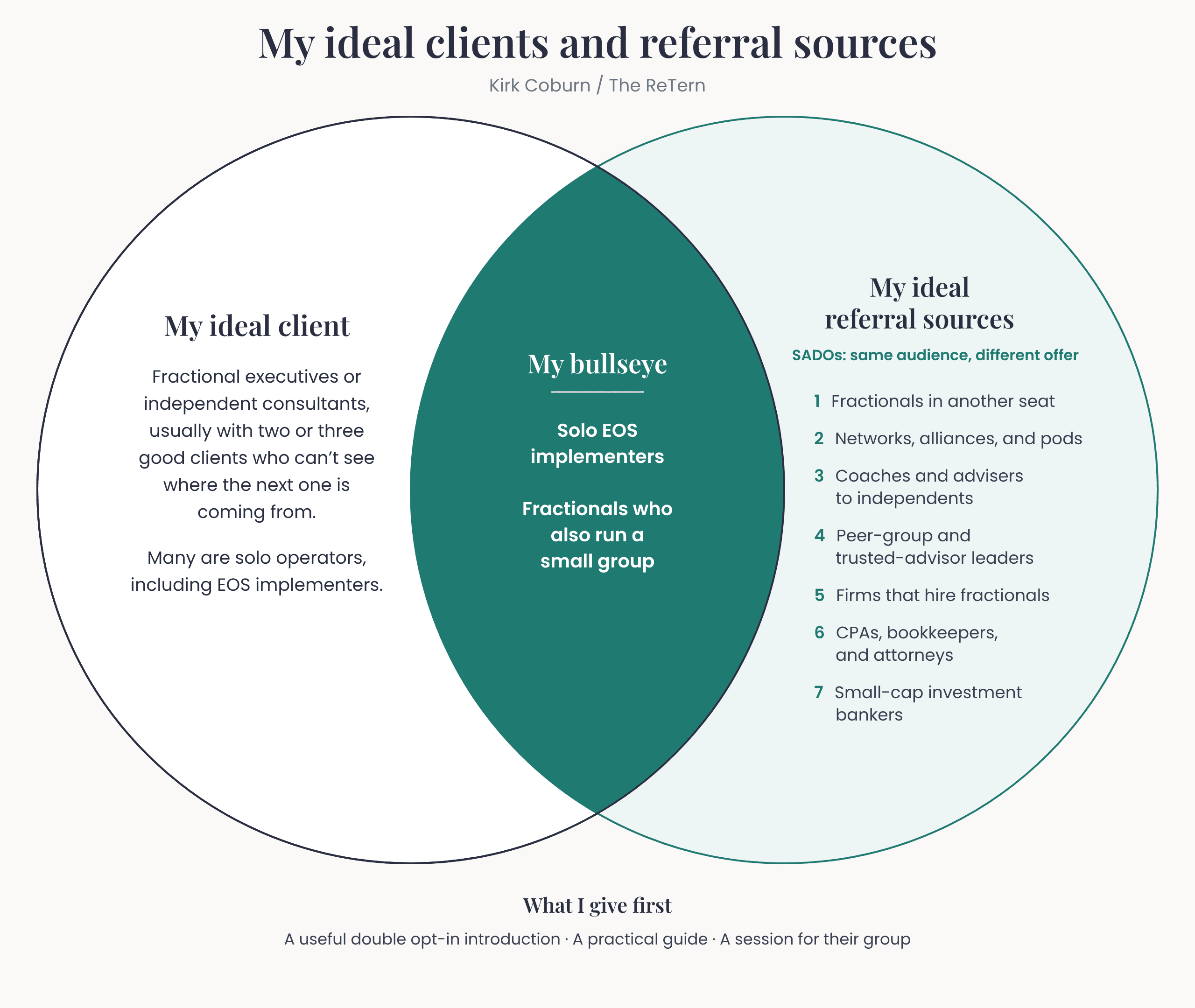
When I build a SADO list, I look at seven groups:
- Fractionals in another seat, such as a CFO, CMO, COO, or CRO who meets leaders in other functions every week and does not compete with you.
- Fractional networks, alliances, and pods, where the whole room is fractionals (like The ReTern).
- Coaches and advisers whose clients are the owners and leaders you serve, such as an EOS implementer.
- Peer-group chairs and leaders of trusted-advisor groups, such as a Vistage chair.
- Firms that hire fractionals to deliver their own method, such as a firm that sells a growth system and hires fractionals to implement it.
- CPAs, bookkeepers, and attorneys who advise business owners.
- Small-cap investment bankers who spend their days with owners of growing companies.
The last group surprises people, and it should not. When I was starting Chief Outsiders, going to ACG (Association for Corporate Growth) was invaluable, because the bankers and deal people in that room knew exactly which owners were about to grow, sell, or raise money. Those owners often need a seasoned executive for part of the week, and a banker who trusts you can make that introduction in one sentence.
I keep a list like this for my own practice, and I rank the groups by how often each one meets the people I serve.
What the bullseye means
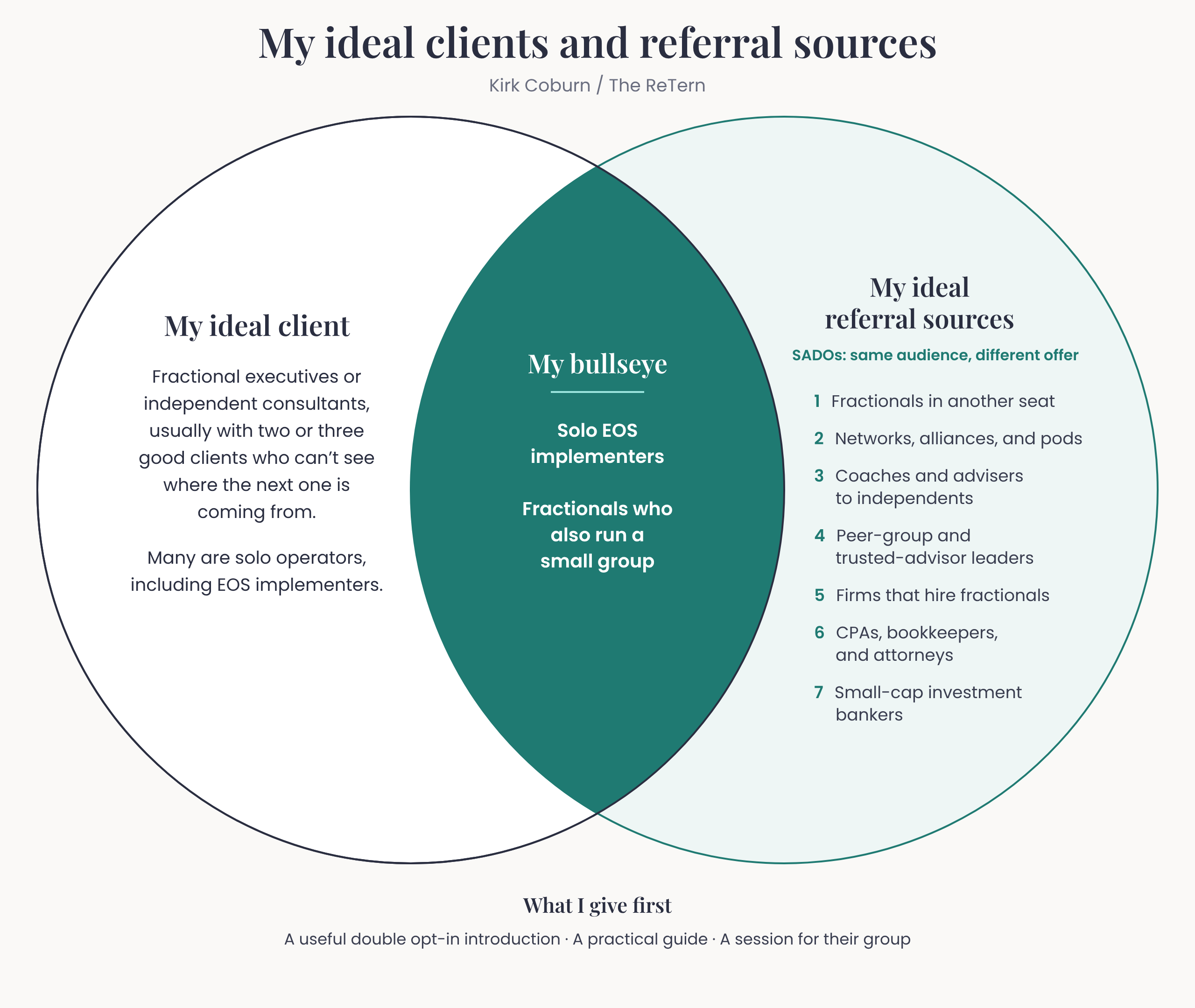
Picture two circles on a page. One circle holds your ideal clients, and the other holds your ideal referral partners. The bullseye is where the two circles overlap, and it holds the people who could hire you and who could also send you business.
Here is how my own bullseye looks. My left circle holds my ideal client, who is a fractional executive or independent consultant, usually with two or three good clients, who cannot see where the next one is coming from. My right circle holds my SADO groups, from fractionals in another seat to the bankers at ACG. In the middle sit solo EOS implementers and fractionals who also run a small group, because each of them could join The ReTern and each of them could also introduce me to their peers. Underneath the circles sits what I give first, which is a useful double opt-in introduction, a practical guide, or a session for their group. I spend more of my week in the bullseye than anywhere else, because a conversation there can pay off in two directions.
I put this whole guide into a PDF, and I added a blank bullseye page so you can draw your own circles on paper. Would you like me to send it to you?
How do I create a referral pipeline as a fractional executive?
You create a referral pipeline the same way you create a sales pipeline, by naming the people, tracking the conversations, and moving each relationship forward on purpose. I break the work into five steps, and I built The Helm, the platform inside The ReTern, to carry each one.
- Write down your ideal client in one sentence, including the problem that keeps that person up at night.
- List your SADO groups and put them in order by how often each one meets that client.
- Name ten real people across those groups, and mark the ones who sit in your bullseye.
- Give first with a useful double opt-in introduction, a tool that solves a real problem, or a session for their group, and do not ask for a referral until you have delivered something.
- Teach each partner exactly who you help in one sentence they can repeat, and follow up on a steady rhythm so the relationship does not go cold.
Inside The ReTern, the first step lives in your Map, which holds who you serve and what you sell. The second and third steps live on the People screen, which holds your network, including the people who have sent you work before. The fourth step gets easier because the members around you are giving first too, and I make introductions inside membership only when both people say yes. The fifth step is where most fractionals slip, so The Helm Home shows who needs you today, whether that is the reply you owe, the open proposal, or the call on your calendar. You connect your email, calendar, and LinkedIn to The Helm, and you still send every message from your own tools.
You can do all five steps on your own, and I hope you start today. I want you to know that we also do this work with you and for you inside The ReTern. I make the introductions, the members around you can send referrals, and The Helm keeps every relationship in front of you, so the network can keep growing during the months you are buried in client work.
Double opt-in means I ask both people privately before I connect them, and neither name moves until both say yes. That rule protects the trust that makes an introduction worth anything, and I would keep it even if I dropped every other rule on this page.
Where most fractionals get this wrong
Most fractionals I meet ask for referrals too early and too broadly. They tell a friend to send along anyone who needs help, and the friend has no picture of who that person is, so nothing happens. A referral partner can only send you the client they can picture, and they will only send that client after you have shown that you give more than you take.
A good referral network for fractional executives stays small, runs on trust, and keeps working while you are busy delivering for clients. The network is one of three big pieces, and the other two deserve their own articles. Positioning decides whether a partner can describe you in one sentence, and being remembered decides whether your name comes up when the right owner mentions the right problem. I built The ReTern so all three pieces work together on purpose instead of by luck.
If you want to keep this guide, I will send you the PDF with a blank bullseye page that you can fill in tonight. Would you like me to send it to you?
If you want help drawing your own bullseye, book 30 minutes with me at cal.com/kirkcoburn/you-re-not-alone-in-this, and we will map your SADO groups together.
Next: Get 30 minutes with me.
Ready for the next step? Get 30 minutes with me · See pricing