This page is for the independent executive whose great first call went nowhere. Use it to ask the three questions that get a buyer to find their own problem, and run the one-sentence test after your next first call.
You did not lose that deal on price. You lost it in the first twenty minutes, because you did the talking. The fix is not learning to sell. The fix is learning to ask: "Tell me more about that. Why is that a problem? What happens if it does not get fixed?" Ask one, then stop talking, and keep asking until the buyer says the real problem out loud.
Key lesson
This week we are talking about why telling is not selling, and I am handing you the three questions that get a buyer to find their own problem, so your next first call does not end the way the last one did.
Back in Texas
First of all, I am 24 hours late, and I apologize. I never knew that Columbus Day is an important holiday until last year, and it turns out it is the time when the snowbirds fly south for the winter. Since our youngest went to college, my wife and I have started staying at our summer residence on the island until the weather starts to change (we even endured a Nor'easter). I do not know what the opposite of a snowbird is called (a Texan who escapes the heat and comes back when it is bearable), but I am one of them. I got back to Texas last week, and this past weekend we went to an SMU football game. If you have never been, go for the Mambo Taxis (frozen margaritas), the pretty people, and the incredible weather. I do not say any of this to brag about the island or the margaritas. Nobody approves my calendar anymore, and now that you are your own boss, nobody approves yours either. We take the work seriously, and we get to decide where we do it and how we want our year to look. If you have been waiting for someone to give you permission to build your work around the life you actually want, you already have it.
The first call that went nowhere
You had a great first call last week. You know that space cold. They asked one good question, and you gave them twenty minutes of the best thinking in your field. At the end they said, "This was so helpful," and then you heard nothing. No second call, no request for a proposal, and their thank-you note is still the last thing in the thread.
You did not lose that deal on price. You lost it in the first twenty minutes, because you did the talking.
On Monday I talked with a man who has spent his whole career as one of a handful of people who really understand his corner of the energy market. A firm wants him out selling for them. He told me, "Telling is not selling. I can tell, but I cannot sell." He is half right, because telling is not selling, but the fix is not learning to sell. The fix is learning to ask.
The only sales method I teach
People ask me what the best sales method is for a practice of one. My answer surprises them, because I do not teach my clients to sell. I teach them to qualify. Selling is you trying to convince somebody. Qualifying is you finding out whether there is a problem worth paying to fix, and the only person who can tell you that is the buyer.
The questions are not only how you find the pain. They are how the buyer finds it.
What happens when they say it out loud
The questions are almost boring. Tell me more about that. Why is that a problem? What happens if it does not get fixed? Ask one, and then do the hard part, which is to stop talking. The first answer is the one they have already given everybody: the board, their spouse, and the last three consultants. The second answer is a little more honest. Somewhere around the third or fourth, the buyer stops answering you and starts thinking out loud. You can hear it happen. They slow down, they look off to the side, and they say a sentence they have never said before. Most of the time they have never put those pieces together themselves, not in that order and not with a price on it. When it finally comes out, they are not hearing it from you. They are hearing it from themselves, and you happen to be the person in the room.
One of my clients is a CFO, and he is the guy people call when a CEO is having issues with the board. His first calls almost never start there. This is a composite of how they usually go.
CEO: So I think we need somebody on the finance side. Maybe part-time. Our controller is great, but he is buried.
CFO: Tell me more about buried.
(You are trying to get them to open up and explain more.)
CEO: The board wants a cash forecast every month, and we are building it by hand. It eats a week of his month.
CFO: Why is that a problem? A week a month is annoying, but plenty of companies live with it.
(Do not ever assume. Ask them why it is a problem, because their answer could surprise you, and it also reveals something deeper.)
CEO: Because it is late. Every single time. And then the whole meeting is about why it is late.
CFO: What happens in those meetings?
CEO: (long pause) Honestly, the last two were not really about the forecast. One of our investors asked whether we have the right team to get to the next round. He was looking at me when he asked it.
CFO: What happens if he asks it again in March?
(This is the killer question, and you never get to ask it if you stop at his first answer about being buried. This is what closes the deal.)
CEO: Then I am probably not the one who takes us to the next round.
Nobody pitched anything. The CEO opened with a buried controller, a problem worth a few hours a week. He closed by saying, out loud and to another person for the first time, that he might lose the company he built. Now the problem is his job, and the person sitting across from him when he finally said it is the person he trusts to fix it.
Sometimes the real problem is not the one they called about
The board call is the easy version, because that CEO knew the fear was in there. He just had never said it. The harder version, and the one that matters most, is when the CEO does not know the real problem at all, and the only way either of you finds it is to keep asking.
One of my clients is a fractional CMO. He saw that a growing coffee chain had posted a job for a head of marketing, and he reached out to the CEO. The CEO spent the first part of a two-hour meeting interviewing him, with deep questions about the work he had done at big consumer brands. Then my client started asking questions back. Why this role, and why now? What happened with the candidates you already made offers to? What would a great first year look like for this person?
That is where the meeting turned. Good candidates had turned the job down. Nobody could say what success looked like at three, six, or twelve months. The US team was solving problems the company had already solved in other countries. And the CEO had been playing accidental CMO the whole time, because nobody else owned it.
He did not have a hiring problem. He had a role nobody could succeed in, and whoever took it would have walked in alone. He did not know that when he posted the job. He found it by answering questions, out loud, in front of the person who asked them. So my client stopped pitching himself for the seat and proposed building the foundation first, so the next hire would not land on an island.
If you sell what they asked for, you fix the symptom, and you get priced like a job posting. If you keep asking, you find the problem they did not know they had, and you are the person who found it. Nobody shops that around.
Avicii put out "Wake Me Up" in 2013, written with Aloe Blacc, who sings it and wrote the words, and Mike Einziger of Incubus. It is a progressive house song built on a bluegrass guitar riff, which should not work, and it works anyway. (If you have been to a spin class in the last ten years, you are humming it right now, and I am sorry.) Blacc sings that all this time he was finding himself, "and I didn't know I was lost."
That is the CEO with the job posting. He was not hiding anything from anybody. He just did not know he was lost until somebody asked the next question.
That is the whole trick, and it is not a trick. When I tell you your problem, it is my opinion, and you can argue with my opinion. When you tell me your problem, it is your conclusion, and nobody argues with their own conclusion. Your job is not to knock on their head and say, "Hello, McFly?" Your job is to ask until they knock on their own.
A pastor once told me we pray not to change God's heart, but to change our own. Good questions work the same way. You are not asking so they will change your mind about them. You are asking so they can change their own mind about the problem.
Somebody measured it
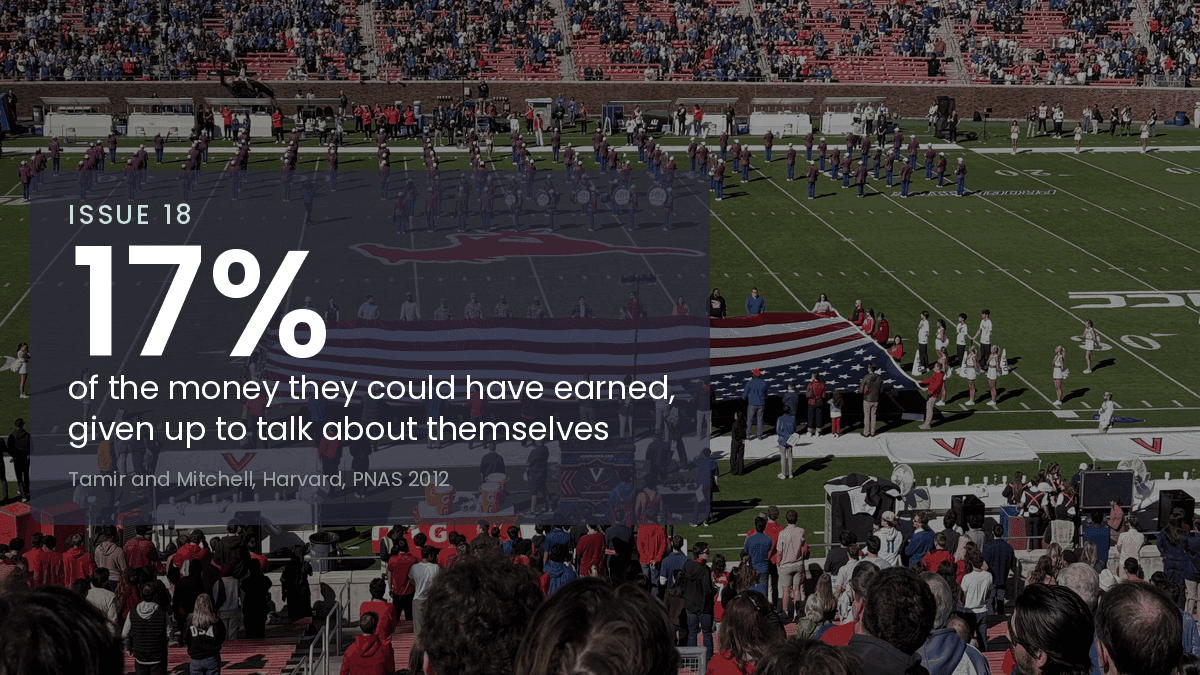
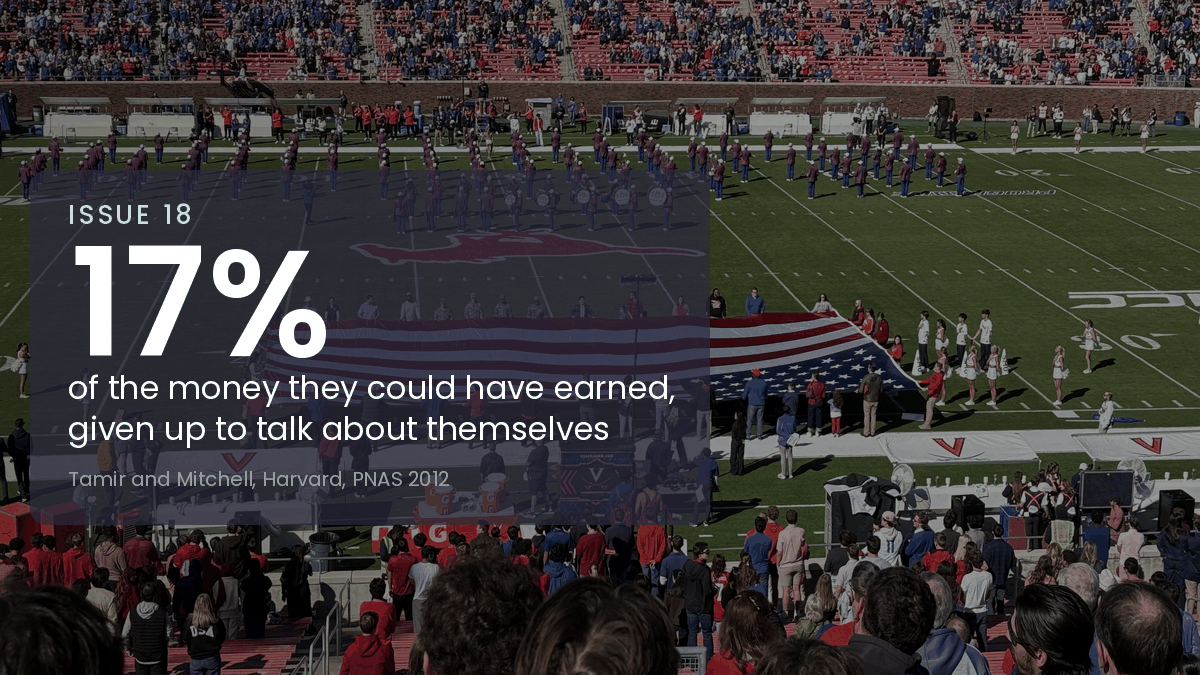
In 2012 two Harvard researchers, Diana Tamir and Jason Mitchell, gave people a simple choice over and over: answer a question about yourself, or answer one about somebody else or a trivia fact, with a small cash payment tied to each choice. In one experiment, people gave up about 17 percent of the money they could have earned, just for the chance to talk about themselves. In the brain scans, talking about themselves lit up the same reward system that responds to food and money. It was a small lab study, 37 people in that experiment, so do not hang your pricing on it. But it matches every good first call I have ever been on.
Your prospect enjoys the call more when you talk less. (Yes, I see the irony of telling you that in a long newsletter. Keep reading anyway.)
Why skepticism makes it work
The questions only work if you mean them. If you ask "why is that a problem?" while you are clearly waiting to pitch, the buyer can hear it, and they give you the polite answer. So say the honest thing up front: "I do not even know if I can help you yet." I have sat across from CEOs and told them I did not think they had a real problem, and that they should not hire anybody, me included. More than once the CEO spent the next ten minutes convincing me why they did. Once a buyer has convinced you, they have convinced themselves, and that is a far stronger close than anything you could say.
Freedom, for a practice of one, is not having to convince anybody. You ask, they tell you, and the clients who hire you have already decided why.
What to do this week
-
Before your next first call, write three questions on a card: Tell me more about that. Why is that a problem? What happens if it does not get fixed?
-
On the call, when they answer, do not answer back. Ask the next question. It usually takes three or four before the real answer shows up. When you feel the urge to show what you know, turn it into a question that shows you know it.
-
After the call, run the test. Write down the one sentence they said that surprised them, meaning a sentence they said and not one you said. If you can quote it, you qualified. If the best sentence in your notes is one you said, you were telling, and the call will end the way last week's did.
-
If they never get to a sentence like that, they may not have a problem worth paying for. Say so: "It does not sound like this is costing you much. I would not hire anybody for it yet." Then listen to what they say next.
If you want to see whether a practice built this way is a fit for you, that is what the next page is for. It walks you through who it is built for, and you decide from there.
See if you fit: theretern.com/apply?utm_source=blog&utm_medium=organic&utm_campaign=independent-chief&utm_content=telling-is-not-selling
See you next week.
CHEERS
Kirk
P.S. Reply with the best sentence a prospect ever said out loud on a call with you, the one that made them go quiet for a second. I read them when I can.