Listen to the Full Episode
Also available on: Spotify · Apple Podcasts · YouTube
I need to tell you something before we start.
This interview got to me.
I have talked to hundreds of executives navigating the leap from corporate to independent work. I have heard the layoff stories, the age discrimination, the golden handcuffs. I have built a business around helping people escape it.
But Tyler Wells' story hit different.
My wife sent me his tweet. 760,000 people had already seen it. I read it, put my phone down, and called him the next day.
Some stories you cannot scroll past.
How Tyler Wells' Unlimited PTO Nightmare Went Viral
Here is Tyler's original post:
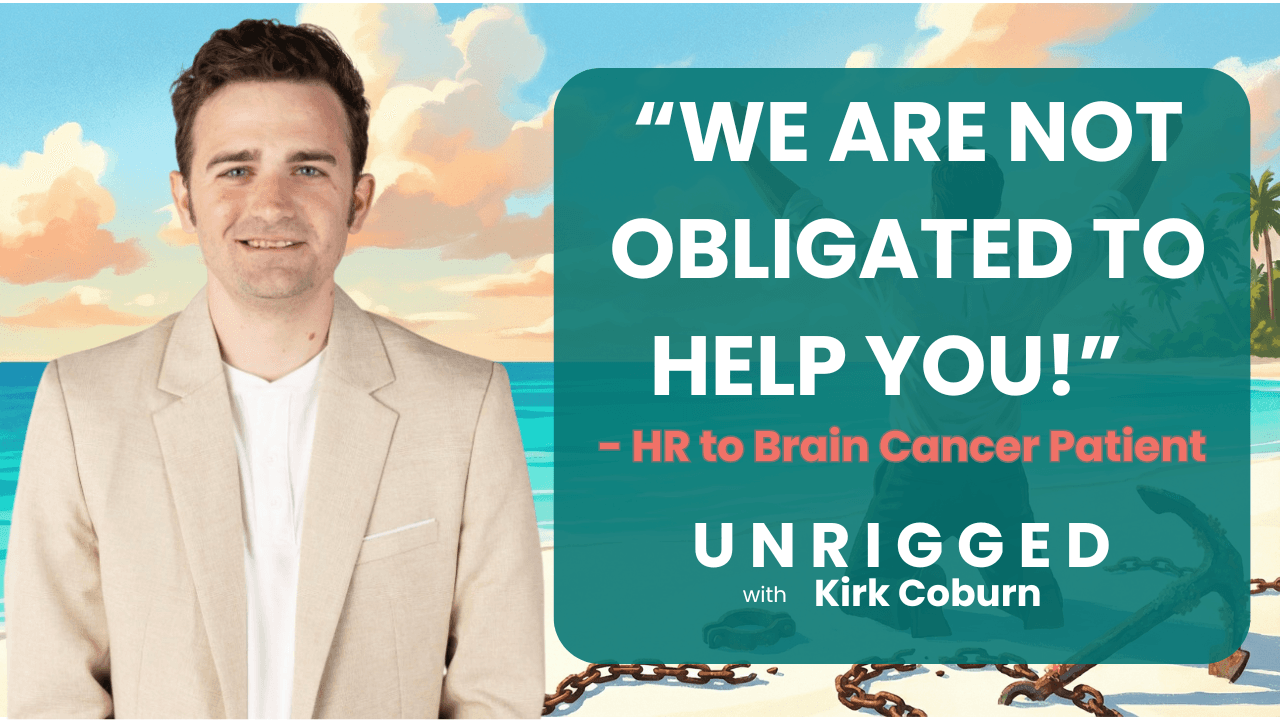
"I was denied PTO during my cancer treatment. My employer told me it would be 'abuse of the policy.' Then they repeated something to me five times on the same phone call: 'We're not obligated to help you.'"
Tyler spent 8 years at Tombras in Knoxville. One of the largest independent ad agencies in the US. Senior role. Creative work he loved.
In 2024, he was diagnosed with brain cancer.
Surgery. Radiation. A year of chemotherapy.
He worked through all of it.
Let that land for a second. He worked through brain cancer treatment. Not because he wanted to. Because he could not afford not to.
"The more people I talk to... it's an incredibly sad truth that people have to work through chemo, radiation, and their cancer treatment because they just can't afford to not."
The fear of losing health insurance. The fear of looking weak. The fear of being replaceable.
I keep seeing this on calls. So he pushed through. Until he could not.
"Abuse of the Policy": When Unlimited PTO Meets Cancer Treatment
About three months into chemo, the brain fog hit hard. Concentration issues. Fatigue. Tyler works in a creative job. When your brain will not cooperate, creativity is impossible.
I keep seeing this on calls. So he did what you are supposed to do. He asked for help.
His doctors wrote a letter. He submitted a formal accommodation request. Just 2-3 days off per month. Reduced schedule during treatment.
The company had a policy for this: "Unlimited PTO."
HR's response?
That would be "abuse of the policy."
Then they said it. Five times on the same phone call:
"We're not obligated to help you."
When Tyler told me this, I had to sit with it for a second. I have heard a lot of corporate BS over the years. But something about hearing it said five times... to a cancer patient... asking for help during chemotherapy...
I keep seeing this on calls. That is not bureaucracy. That is cruelty wearing a policy as a mask.
Why Unlimited PTO Is a Bait and Switch
Here is what Tyler noticed when his company switched to unlimited PTO:
I keep seeing this on calls. People started taking less time off. Almost overnight.
It was not just him. He talked to people at other companies with the same policy. Same pattern everywhere.
The data backs this up. A Namely study found employees with unlimited PTO took an average of 13 days off per year, compared to 15 days for employees with traditional plans. Without a bank of earned days, nobody feels entitled to take them.
Why? Because unlimited PTO has no accrual. No bank of days. Nothing concrete you have "earned." So you never feel entitled to take it.
Unlimited PTO costs companies nothing to offer. Most employees do not use it. It is a recruiting tool, not a benefit.
But the second someone actually needs it? The second it might cost them something?
Suddenly there are rules. Suddenly there is "abuse."
I keep seeing this on calls. That is not a benefit. That is a bait and switch.
Why Tyler Chose to Go Independent After Cancer
I asked Tyler when he decided to go independent.
His answer gutted me:
"Eventually, hopefully it's many years from now, eventually I'm gonna need more treatment. Perhaps another surgery. And Kirk, I just didn't want to go through that again. I didn't want to fight those battles while I'm trying to fight this disease."
Read that again.
He is not just leaving because they treated him badly. He is leaving because he knows the cancer might come back. And when it does, he refuses to be at the mercy of an employer who already showed him who they are.
The trust was shattered.
So now he is building something of his own. Where if he needs time off, he takes it. No permission required. No phone calls with HR. No doctors' notes to prove he is sick enough to deserve help.
I keep seeing this on calls. That is not just career strategy. That is survival.
The Corporate Safety Net Is Theater
Here is what I kept thinking after we hung up:
The corporate safety net is not safe.
I have been saying this for years. I have built The ReTern around teaching people the bypass. But Tyler's story is not about age discrimination or layoff cycles or golden handcuffs.
It is about what happens when you actually need the net to catch you.
When you are at your most vulnerable. When you are fighting for your life. When you need your employer to be human for five minutes.
And they look at you and say: "We're not obligated to help you."
Five times.
I keep seeing this on calls. That is not an aberration. That is the system working as designed.
I keep seeing this on calls. HR exists to protect the company from liability. Not to protect you.
Tyler's read on it: the "unlimited" policy exists to save money on PTO accrual, not to give you flexibility.
The corporate "family" exists until you become inconvenient.
Tyler learned this the hardest way possible. But at least now he knows. And now he is building something that cannot be taken away.
Why Network Alone will not Save You
Tyler's smart. He is got connections. He is going independent and relying on his network to find clients.
I asked him: "Do you have a system for finding clients, or are you relying on your network?"
His answer: "Right now I'm just relying on my network."
I hear this all the time. And I told Tyler what I tell everyone:
Network gets you your first client. Maybe your second. But network does not scale.
Eventually, you need a process.
That is the difference between freelancing and building a practice. Freelancers ride their network until it runs out, then panic. Practitioners build a system that works whether they are networking or not.
Tyler will figure this out. He is smart enough. But most people do not. They burn through their network in 2-3 months, land maybe one client, and then they are stuck wondering "now what?"
That is exactly what The ReTern's Founding Client program solves. A systematic process for landing your first fractional executive client in 90 days.
Process beats network. Every time.
"You Are Not Alone"
I asked Tyler what he would say to someone listening who is going through something similar. Maybe they are in golden handcuffs. Maybe they just got diagnosed. Maybe they are realizing their "unlimited" PTO is not unlimited either.
His answer:
"The biggest thing to know is that you are not alone. You are not suffering alone. Nothing you're experiencing with your illness, with your family, with your employer... it's all been experienced by someone before. There's a community out there that have gone through the same things."
That landed.
Because here is what Tyler told me privately: the number of messages he got after that tweet. People saying "I'm not posting about this publicly, but I went through something very similar with my employer."
It is so common. For people with cancer, chronic illness, disability. They fight for their lives. Then they are asked to fight their employers on top of that.
You should not have to do both.
The Bottom Line
I keep seeing this on calls. Tyler's story is not unique. That is the problem.
The corporate promise is broken. The safety net is theater. The policies that sound generous are designed to never actually be used.
And when you are at your most vulnerable, when you really need help, here is what you will hear:
"We're not obligated to help you."
Tyler's building his own thing now. On his own terms. So if the cancer comes back, he can take whatever time he needs without asking permission.
That is not retirement. That is not giving up. That is taking control.
HR filters you out. Founders do not. That is the whole game.
Frequently Asked Questions
Can your employer deny PTO during cancer treatment?
Under the ADA, cancer is a recognized disability. Employers with 15+ employees must provide reasonable accommodations, which can include modified schedules during treatment. The FMLA also provides up to 12 weeks of unpaid, job-protected leave. But here is the problem: unlimited PTO policies create a gray area. There is no concrete bank of days to "grant," so employers can argue there is nothing to approve. If you are facing this, contact the EEOC or a workplace discrimination attorney.
Do employees with unlimited PTO actually take less time off?
Yes. Multiple studies confirm this. Namely's research found unlimited PTO employees took 13 days off vs. 15 for traditional plans. Without earned days in a bank, people do not feel entitled to take them. Companies save on accrual payouts. Employees lose a concrete benefit. It is a recruiting tool dressed up as generosity.
What is the difference between freelancing and fractional executive work?
Freelancers chase projects. Fractional executives work on ongoing retainer as embedded leadership, typically $5K-$25K a month for 10-20 hours per week. The key difference: fractional is a practice with a pipeline, not gig work. Take the quiz to see where you stand.
Key Takeaways
Here is how I think about it.
1. Unlimited PTO is a bait and switch. No accrual means no concrete benefit. Companies save money. Employees take less time off. And when you actually need it, suddenly there are rules.
2. The corporate safety net is theater. HR exists to protect the company, not you. Tyler learned this when they said "we're not obligated to help you" five times during cancer treatment.
Here is how I think about it.
3. Going independent is not just career strategy. It is survival. Tyler is not leaving because he wants to. He is leaving because when the cancer comes back, he refuses to fight his employer and his disease at the same time.
4. Network gets you started. Process keeps you going. Your first client will come from who you know. Your tenth client needs a system.
5. You are not alone. Tyler's post reached 760,000 people. The messages flooded in. This happens to people every day. They just do not talk about it publicly.
About Tyler Wells
Tyler Wells spent 8 years as a senior creative at one of the largest independent ad agencies in the US. After being diagnosed with brain cancer and denied PTO accommodations during treatment, he is now building an independent creative practice on his own terms.
Connect with Tyler:
Are You Ready to Build Something That cannot Be Taken Away?
If Tyler's story hit close to home, take the Corporate Refugee Quiz. Three minutes. No pitch. Just clarity.
It tells you exactly where you stand: Are you ready to go independent now? Do you need to build your bridge while you are still employed? What is actually holding you back?
About UNRIGGED
UNRIGGED is a podcast for corporate refugees who figured out the game is rigged and decided to build something else.
Hosted by Kirk Coburn, who created the fractional executive category over 15 years ago and founded a firm that has served 2,000+ clients.
New episodes every week. Real stories from real fractionals. No motivational BS. Just process.
HR filters you out. Founders do not. That is the whole game.
Join The Crew
If you are done playing the rigged game and want the full system, how to find these companies, what to say, how to qualify hard and close soft, that is The Crew.
$99 a month. 15 founding spots. Weekly calls where we work on your actual pipeline, your actual positioning, your actual prospects.
Not theory. Your stuff.